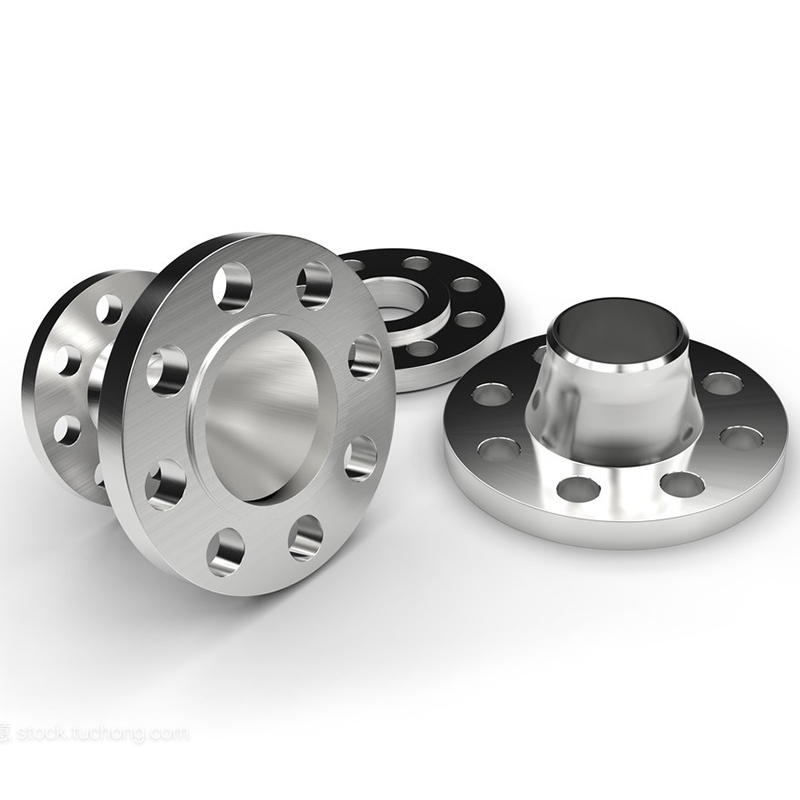
ASTM A707 L5 forged flange is a high-strength, low-alloy steel forging specifically designed for use in low-temperature environments. It is mainly used for the manufacturing of flanges in oil and gas pipelines.
Its core advantage lies in achieving high strength and excellent low-temperature toughness in an ultra-low carbon Ni-Cu-Nb alloy system through the precipitation hardening mechanism of copper (Cu).
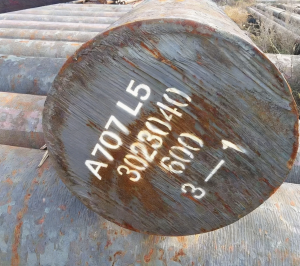
Material Specification Interpretation
Standard: ASTM A707/A707M
Material Type: Forged carbon steel and alloy steel flanges
Grade (Level): L5, indicating specific chemical composition
Class (Level): Optional Class 1, 2, 3, 4, representing different strength levels. Generally, the L5 grade can provide all levels.
Chemical Composition (Grade L5)
The chemical composition characteristics of ASTM A707 L5 lie in the addition of alloy elements such as copper (Cu), nickel (Ni), chromium (Cr), molybdenum (Mo), and niobium (Nb). The specific composition range is as follows:
| Element | Content (wt.%) | Element | Content (wt.%) |
| Carbon (C) | ≤ 0.09% | Silicon (Si) | ≤ 0.37% |
| Manganese (Mn) | 0.35 – 0.75% | Phosphorus (P) | ≤ 0.030% |
| Sulfur (S) | ≤ 0.035% | Chromium (Cr) | 0.56 – 0.94% |
| Nickel (Ni) | 0.67 – 1.03% | Molybdenum (Mo) | 0.14 – 0.28% |
| Copper (Cu) | 0.95 – 1.35% | Vanadium (V) | ≤ 0.06% |
| Niobium (Nb) | ≥ 0.02% | |
Mechanical properties (varies by grade)
The mechanical properties of ASTM A707 L5 vary depending on the Class (grade). The following are performance references for common Class 3 and Class 4:
| Performance Indicators | Class 3 | Class 4 |
| Tensile Strength (min.) | 515 MPa | ≥ 620 MPa |
| Yield Strength (min.) | 415 MPa | Not specified |
| Elongation (min.) | 20% | ≥ 20% |
| Hardness (HBW) | 156 – 235 | 179 – 265 |
| Impact Energy (min., -62°C) | 68 J (average) | – |
Heat treatment process
Materials can achieve the desired properties through various heat treatment processes, among which the most crucial one is precipitation hardening:
Precipitation Hardening: Heat the forged piece to 538°C – 677°C, hold for at least 30 minutes, and then cool at any speed.
Objective: By precipitating fine ε-copper particles, significantly enhance the yield strength of the material while maintaining its toughness.
Application fields
This material is mainly applied in situations where there are strict requirements for low-temperature toughness:
Petroleum and natural gas pipelines: Pipeline systems operating in low-temperature environments (as low as -62°C).
Marine engineering: Offshore oil and gas platforms.
Low-temperature and cryogenic conditions: Equipment handling low-temperature media or located in cold regions.
Acidic environment (Sour Service): Suitable for applications requiring resistance to hydrogen sulfide corrosion.
Manufacturing and Certification Requirements
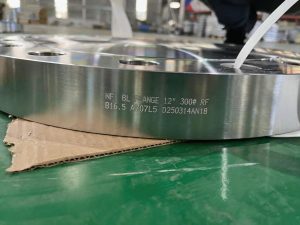
Product Standards: Can be manufactured in accordance with standards such as ASME B16.5, ASME B16.47, NORSOK L-005, etc.
Certification: Commonly used for projects that require international certifications such as NORSOK M-650.
ASTM A707 L5 is a special forged flange material that achieves high strength through copper precipitation hardening and possesses excellent low-temperature toughness. It is specifically designed to meet the demanding conditions in the oil and gas industry, such as low temperatures, high pressures, and marine environments. It is an economical and efficient alternative to traditional low-temperature carbon steel and some stainless steels.